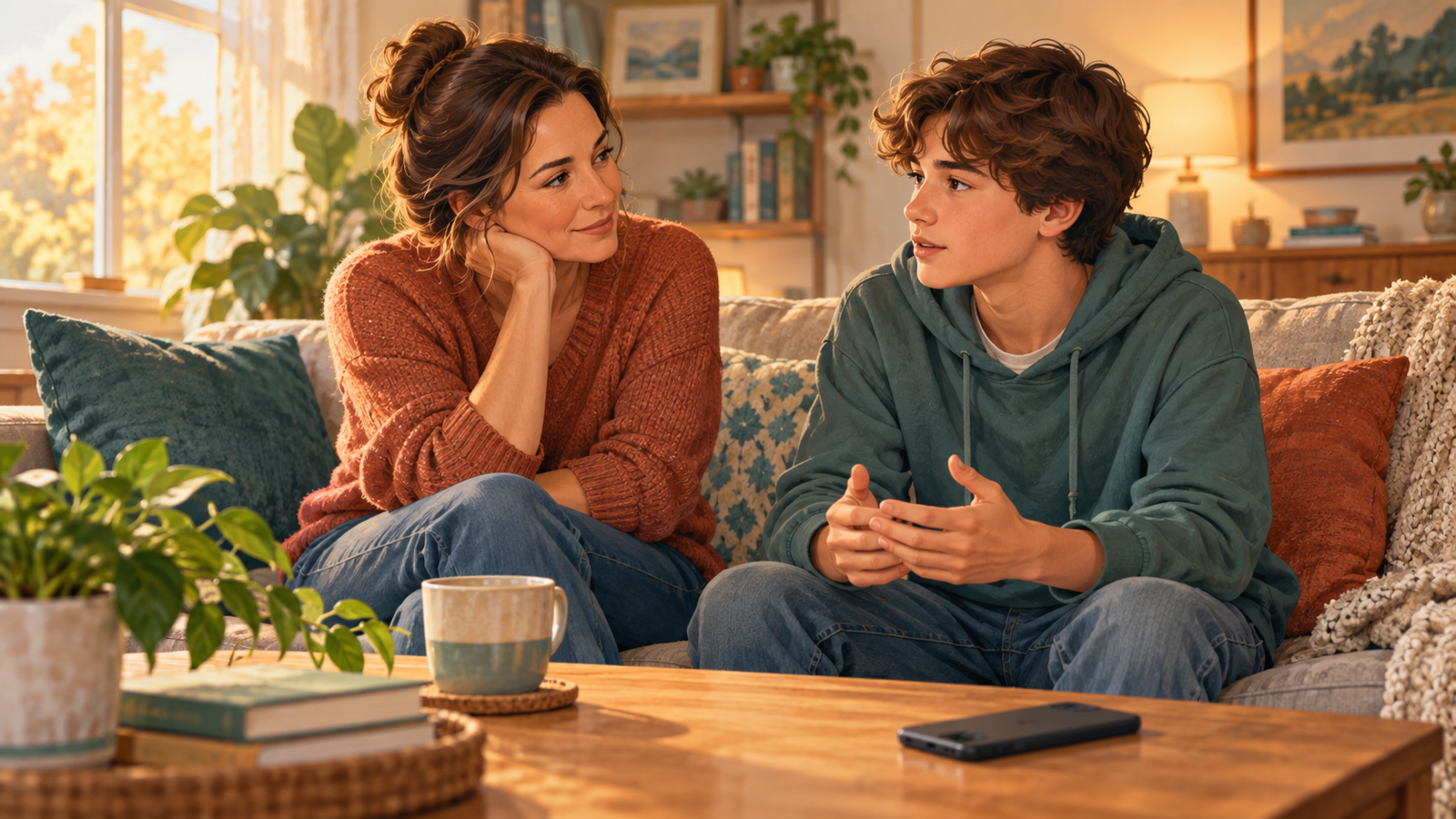
Read enough headlines and you could believe every extra hour on a screen pushes a child towards anxiety or depression. Listen to the opposite camp and you may hear that worried parents are simply afraid of new technology.
The evidence supports neither extreme. Screens can affect wellbeing, but “screen time” is not one single experience, and a timer cannot tell you whether a child is thriving.
Short answer: the relationship between screen use and mental health is real but usually small, complicated, and often two-way. Pay attention to what a child is doing, why they are doing it, and what screen use is replacing—not only the daily total.
What the strongest recent evidence says
A 2025 systematic review in Psychological Bulletin examined 132 longitudinal studies, with 117 studies and more than 292,000 children included in its meta-analysis. Because these studies followed children over time, they offer more useful evidence than a one-off survey.
The researchers found small associations in both directions. More screen use predicted later emotional or behavioural difficulties, and existing difficulties predicted more later screen use. Gaming showed stronger links than other forms of screen use in this analysis.
An Australian study following 4,058 adolescents found a similar reason for caution about dramatic claims. Screen time and symptoms looked clearly related when measured at the same moment, but the links were much weaker over the following year. Additional screen time had only a weak association with later depression and no longitudinal association with anxiety in that study.
That does not mean screens are harmless. It means a child may use screens more because they are lonely, anxious, excluded, bored, or having trouble at school. Taking away the device without noticing the underlying problem can remove a coping tool while leaving the reason for coping untouched.
“Screen time” hides the differences that matter
Forty minutes video-calling a grandparent is not the same experience as forty minutes being targeted in a group chat. Making music, completing homework, watching frightening clips, playing cooperatively with friends, and scrolling appearance-focused content all happen on screens, but they do not carry the same opportunities or risks.
The American Academy of Pediatrics' 2026 policy statement reflects this more useful view. It says digital media can support learning, identity, connection, and wellbeing, while engagement-driven design, harmful content, disrupted sleep, and displacement of healthy activities can contribute to poorer outcomes. The child's age, temperament, vulnerabilities, relationships, and the quality of the digital environment all shape the result.
This is why our broader guide to what screen-time research actually says focuses on context and consistency rather than presenting one number as a universal safety line.
Look for impact, not just hours
A total can be a useful signal, especially when use has risen sharply. But these questions tell you more:
- Is screen use regularly delaying sleep or happening in bed after lights-out?
- Has it crowded out movement, schoolwork, face-to-face time, hobbies, or meals?
- Does the child feel worse after particular apps, games, conversations, or types of content?
- Are they hiding upsetting experiences, harassment, sexual pressure, bullying, or harmful content?
- Are screens their only reliable way to calm down or escape difficult feelings?
- Can they stop with predictable support, or does nearly every transition become overwhelming?
None of these signs proves that a screen caused a mental health problem. They show where a calm conversation or extra support may be needed. If sleep is the pressure point, start with our evidence-based guide to screen time and sleep.
The goal is not to win a case against screens. It is to understand what is happening in your child's life.
A practical response that does not begin with panic
Start by observing for a week. Notice when use happens, what the child chooses, their mood before and afterwards, and which important activities are being squeezed. You may find that bedtime scrolling is the main issue—not every screen throughout the day.
Then change one pressure point. Charge phones outside bedrooms, protect meals, turn off autoplay and unnecessary notifications, or create a predictable recreational window after responsibilities. Clear routines work better than a sudden ban delivered during an argument.
Ask curious questions too: “What do you like about this?” “Does anything there make you feel worse?” “Who would you tell if something uncomfortable happened?” If children expect an immediate confiscation, they have a reason to hide the online experiences you most need to know about.
Our guide to having the screen-time conversation without a fight can help with that first discussion. The pillar article on why screen-time fights happen also explains why limits are easier to accept when they are predictable and agreed before the transition.
When limits are useful—and when they are not enough
Limits can protect sleep, movement, homework, and family time. They can also interrupt an unhelpful cycle in which a child feels bad, retreats further into screens, and loses more of the activities that support wellbeing.
But a limit is a boundary, not a mental health treatment. Persistent sadness, anxiety, irritability, withdrawal, major changes in sleep or eating, school refusal, or loss of interest in usual activities deserves attention regardless of screen habits. Speak with a qualified health professional when symptoms are persistent, severe, or disrupting daily life. If a child may harm themselves or someone else, contact local emergency or crisis support immediately.
The bottom line
You do not need to dismiss the risks, and you do not need to fear every minute. Screens can amplify problems, displace protective routines, and expose children to genuinely harmful experiences. They can also provide friendship, learning, creativity, identity, and support.
Use time limits as one tool. Then look beyond the timer: at the content, the context, the child's response, and the life happening around the screen. That is where the most useful answers usually are.
Sources and references mentioned
- Vasconcellos and colleagues, 2025: longitudinal meta-analysis of screen use and children's socioemotional problems
- Li and colleagues, 2025: screen time, depression, and anxiety in 4,058 Australian adolescents
- American Academy of Pediatrics, 2026: Digital Ecosystems, Children, and Adolescents
Build calmer boundaries around screens
Start with one routine that protects sleep, responsibilities, or family time. Then read how to talk about screen time without starting a fight, explore the wider research on screen limits, or join the waitlist for Android updates.