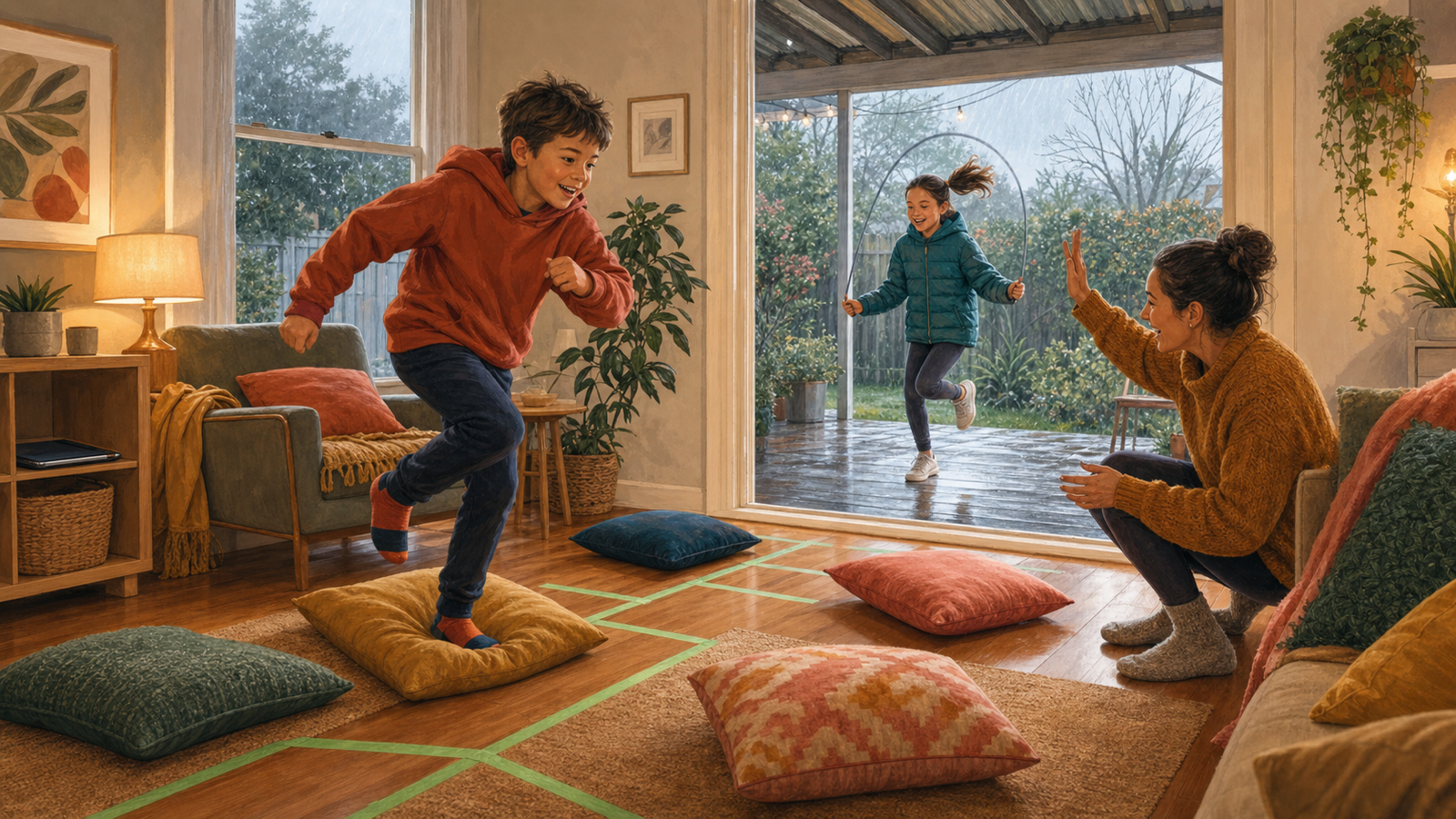
On a cold afternoon, the easiest plan is often the one already glowing in the living room. The kids are tired, the garden is wet, and nobody feels like organising an expedition just to get some movement into the day.
That does not make you lazy, and it does not mean winter has to become three months of screen-time arguments. It means the warmer, easier option has less friction. The answer is to make movement easier to start too.
Short answer: do not wait for a perfect hour of sport. Protect a few small movement windows, prepare two or three indoor options, and make recreational screens follow movement rather than compete with it.
Cold weather really does change how kids move
Weather is not just an excuse. A study of more than 2,000 children aged 6 to 12 used accelerometers to compare activity with local weather conditions. Longer daylight was associated with less sedentary time, while rain was linked with lower moderate-to-vigorous activity on weekdays. A separate seasonal study of children and teenagers also found more sedentary time in autumn and winter than in spring and summer.
The useful conclusion is not that winter defeats healthy habits. It is that habits designed for long, dry afternoons may need a winter version.
Think in movement windows, not workouts
Australian guidance recommends at least 60 minutes of moderate-to-vigorous physical activity each day for children aged 5 to 17. Importantly, that hour does not have to happen all at once. Several shorter sessions count.
That makes winter planning much more realistic. Try protecting three windows:
- Before school: ten minutes walking, scooting, dancing, or helping carry bags.
- After school: twenty active minutes before recreational screens begin.
- Before dinner: a family walk, active chore, or indoor game.
You are not required to track every minute. The point is to stop expecting one heroic activity to rescue an otherwise sedentary day.
Build a tiny indoor movement menu
When a child says, "There's nothing to do," a list of thirty ideas is rarely helpful. Keep a menu of three options that fit your home and take less than two minutes to begin.
- A two-song dance break where each person chooses one song.
- Balloon volleyball over a piece of tape, away from breakables.
- A hallway circuit: crab walk, bear walk, side steps, then repeat.
- A safe obstacle path using cushions and painter's tape on a clear floor.
- Ten-minute jobs with movement: vacuuming, carrying laundry, sweeping, or washing the car under cover.
Active chores count as movement, and they solve a real household problem at the same time. Our guide to getting kids to do chores without nagging shows how to make those jobs specific and predictable.
The best winter activity is not the most impressive one. It is the one your family can start on an ordinary Tuesday.
Use the weather window you actually get
An Australian winter day can move from rain to clear sky and back again. Instead of planning outdoor time for a fixed hour, be ready to use a dry patch when it appears. Keep shoes, jackets, a ball, and scooters easy to reach. Ten minutes outside is still worthwhile.
Cold does not automatically make outdoor play unsafe, but conditions matter. Dress for the temperature, avoid slippery surfaces and storms, and follow local warnings. Children with asthma or another health condition may need individual advice from their clinician.
Put movement before screens, not against them
If you ask a child to stop a game halfway through and go outside, movement feels like the thing that took the fun away. Reverse the order: "First twenty minutes moving, then screens." The boundary becomes part of the routine rather than a surprise interruption.
This works best when the requirement is clear and achievable. It should not sound like "exercise until I decide it is enough." Choose the activity and finish line beforehand. Our pillar guide on why screen time fights happen explains why predictable limits create less conflict than rules invented in the moment.
Screens can occasionally support movement too. A dance video, active game, or family fitness session can be useful when the weather closes in. The test is simple: are bodies moving, or did the activity quietly become another hour on the couch?
Try a one-week winter reset
For the next seven days, choose one twenty-minute movement window before recreational screens. Let your child pick from three options. Prepare the shoes or indoor equipment before the usual screen request arrives. On weekends, add one longer family activity if the weather and everyone’s energy allow it.
Keep the standard humane. A difficult day is not a failed system. Resume at the next window without a lecture. For more help planning days when routines loosen, use the school holiday screen time survival guide.
The bottom line
Winter makes screens easier and movement harder to start. So change the starting conditions. Break activity into smaller pieces, keep a short indoor menu, prepare for brief outdoor windows, and put movement before screens in the daily sequence.
You do not need to turn your lounge room into a gym. You need a few repeatable ways for children to move before the warm, glowing option takes over.
Sources and references mentioned
- Australian Government: physical activity recommendations for children and young people aged 5 to 17
- Kharlova and colleagues, 2020: weather and accelerometer-measured activity in children aged 6 to 12
- Eckelt and colleagues, 2024: seasonal physical activity measured by accelerometer and self-report
Make a winter movement plan that fits real life
Choose one short movement window before screens this week. Then read why parental controls need a family routine, revisit the winter holiday guide, or join the waitlist for Android updates.